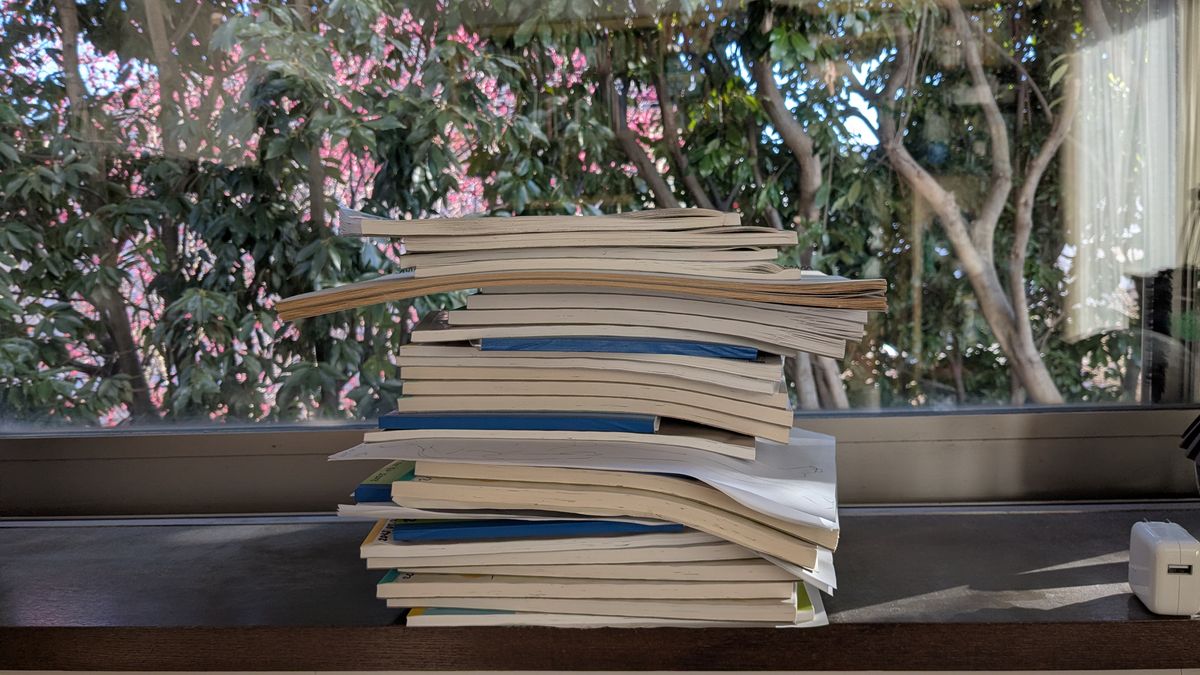
I draw illustrations as a hobby. And from September 2024, I practiced figure drawing almost every day for a year.
(This post will feature drawings of nude models)
Introduction
After practicing for a whole year, I experienced many positive changes.
Before writing about that, I'll share what kind of practice I did.
What I did was practice copying while watching video materials. First, I watched a video of the model striking poses and drew a full figure in one minute. I did this five times, for five poses. Then, I did four two-minute sessions. Finally, I spent five minutes drawing one figure. Including transition time, it was a little over twenty minutes of practice.
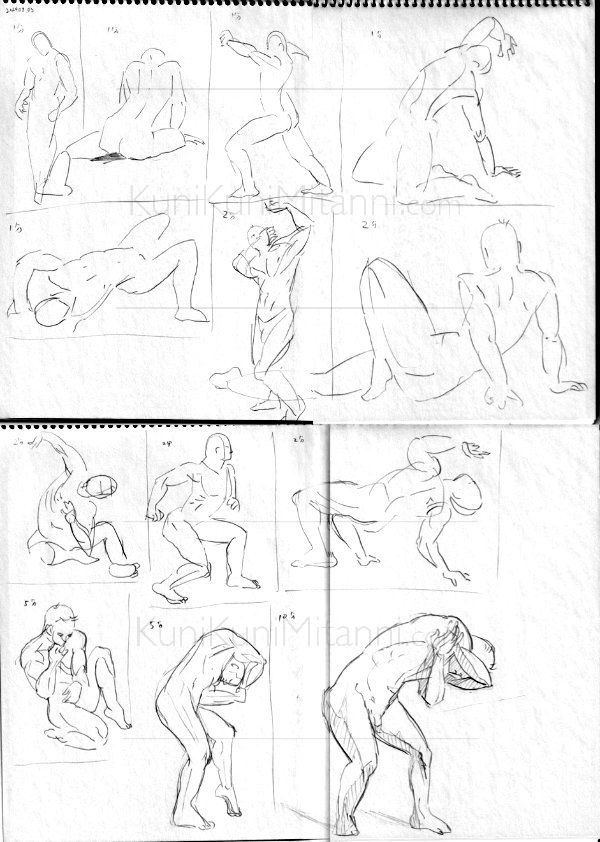
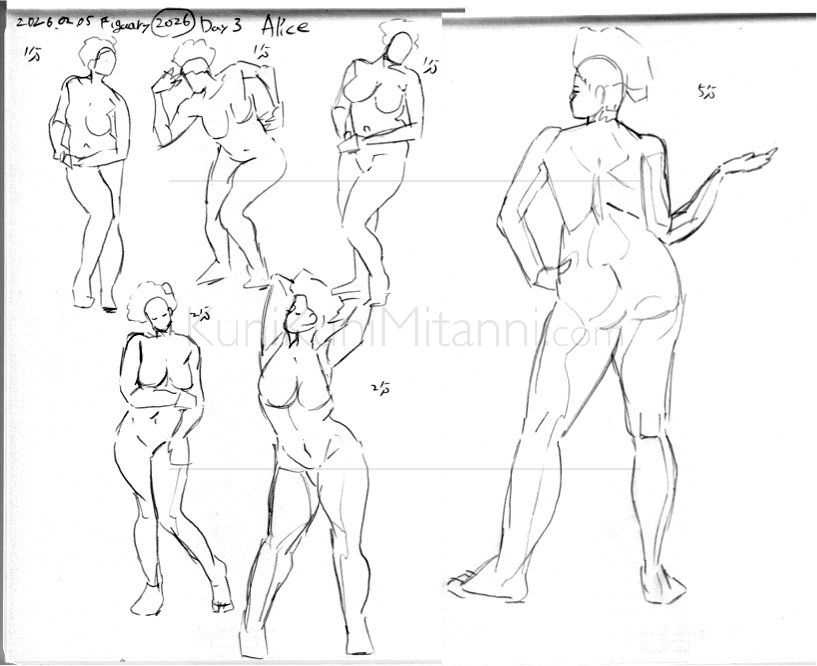
The educational resource I used this past year was “croquis.cafe.” They offer over 600 video lessons, with one new video added each week even now. I subscribed to their paid membership, and my annual subscription renewal was at the end of September 2025. That's when I realized a whole year had passed.
What I gained by continuing the lessons
Figure drawing lessons has given me multiple results.
The skill to draw at the desired size and the ability to fit it within the frame
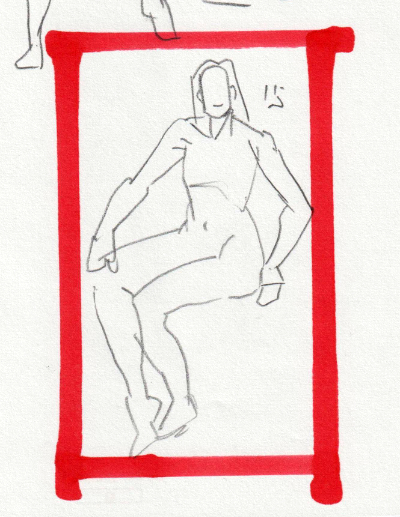
I can now sketch the human body from head to toe on paper at its actual size. Of course, it's not perfect. Poses like lying down are still difficult. But compared to when I first started, it's much better. Lately, when doing five one-minute sketches, I draw one figure at half the paper's height and fit them in two rows.
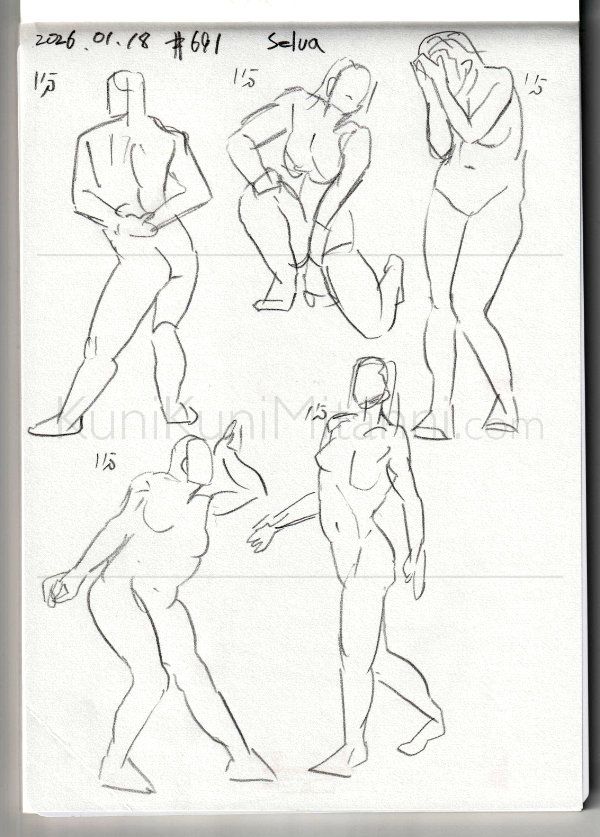
Recent drawings. On the other hand, when I first started—
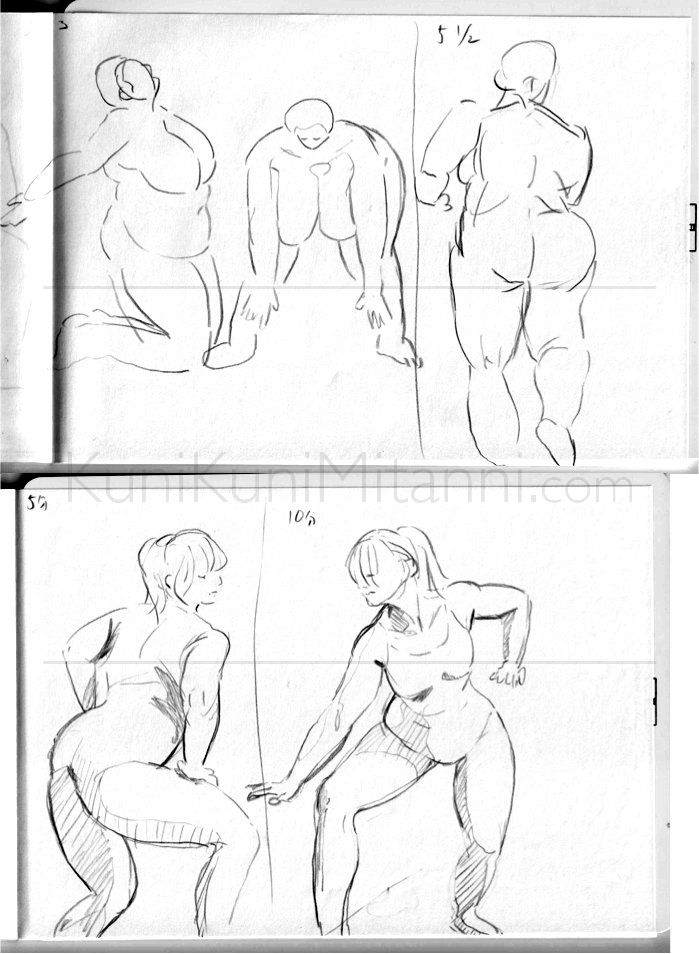
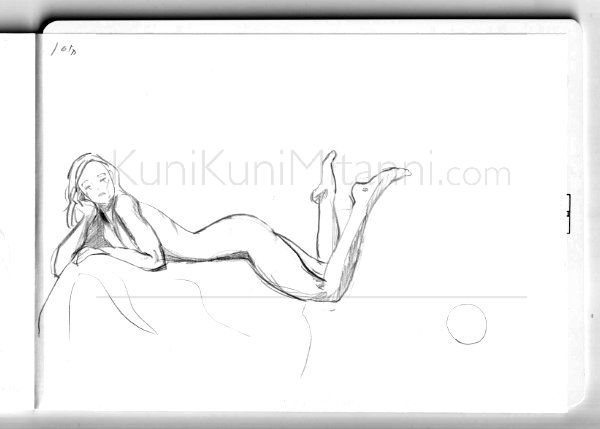
Back then, I either ran out of space to draw legs or left too much blank space.
In this way, my ability to draw at the size I envision is the result of having drawn numerous poses.This ability to draw figures at the size I envision is the result of drawing countless poses. I always start with the head. I learned how much space the head occupies based on its size.
When I first started drawing, I imagined that drawing what I envisioned meant projecting the finished image onto the paper and seeing it appear. But I don't think that kind of sensation actually exists.
Being able to draw within the frame at the size I envision makes drawing analog much easier. I can create rough sketches at the appropriate size and placement relative to the paper.
More line types
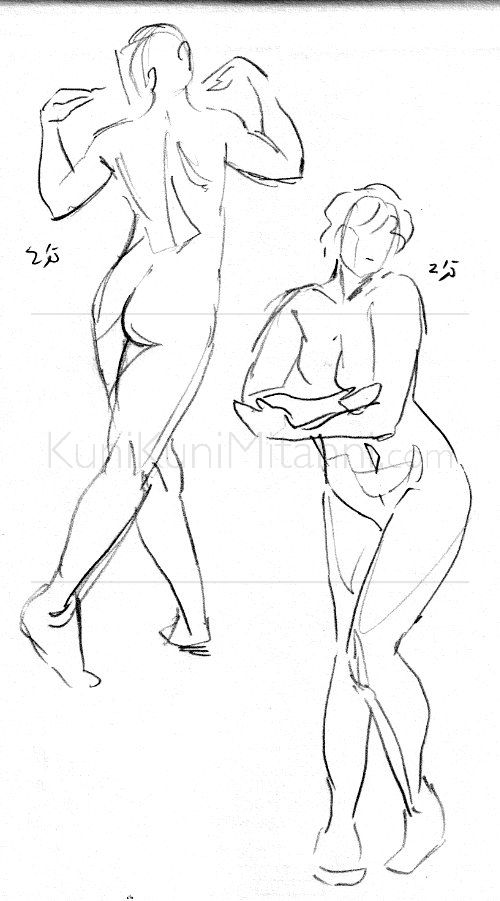
I've learned to draw complex lines with continuous curves. The human body is a series of shapes that can't be captured with simple lines. When I first started sketching, I often couldn't draw them smoothly in one go.
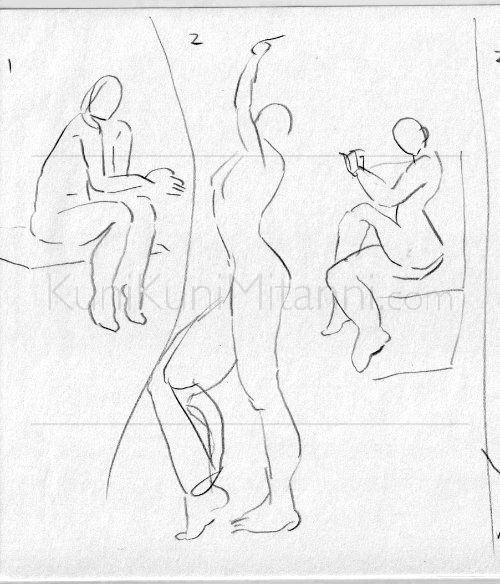
Croquis practice involves copying multiple figures in various angles and poses all at once. I keep encountering patterns I'm not used to. Drawing these shapes with lines is excellent training.
Through this, I learned shapes I could draw in one stroke within the range my hand could comfortably move the pen, as well as angles that were difficult to draw and should be avoided.
The habit of drawing
Before I started taking figure drawing lessons, there were weeks when I wouldn't even pick up a pen once. Now, if I don't draw, I get restless.
What got me started with daily croquis practice was an invitation from a Discord server. In the channel where we shared our sketches, we gently kept each other accountable. That's what made it a habit. I probably would have quit if I'd been alone. I'm truly grateful to everyone on that server. (Since it's now private, I'll keep the details to myself.)
Other observations
Notes on other things acquired through practice.
Croquis isn't anatomy training
In one practice session, I draw ten full human figures. That means I completed 3000 figures in a year. But did sticking with this make me good at drawing the human body? Not quite as much as I'd hoped. I feel like I've seen many pose patterns and memorized the proportions and range of motion for different parts. But this is more memory than knowledge.
To truly master drawing people, carefully copying reference materials or taking anatomy lessons is more accurate and efficient.
Art supplies: Nice to have
For sketching, analog is always best. Sketching helps you remember proportions and builds the muscle memory to draw lines as you envision them. So, digital conveniences like image stabilization, zoom, and undo don't work well with this training. Use paper and pen.
White, bound paper is best. I use B5-sized sketchbooks with 80 sheets per book. You can buy three for 100 yen at home centers. I've tried smaller square paper, but it made drawing standing and reclining poses difficult. Also, having the pages bound in a booklet keeps them in order, which is good. Copy paper is high quality and cheap, but it tends to separate.
Place your paper on an inclined surface, not a flat table. An inclined desk for painting or drafting would be ideal. If placed flat, the figure you're copying will appear to grow larger toward the bottom. This happens because the lower parts are farther from the focal point. Also, leaning over to look at the paper strains your neck.
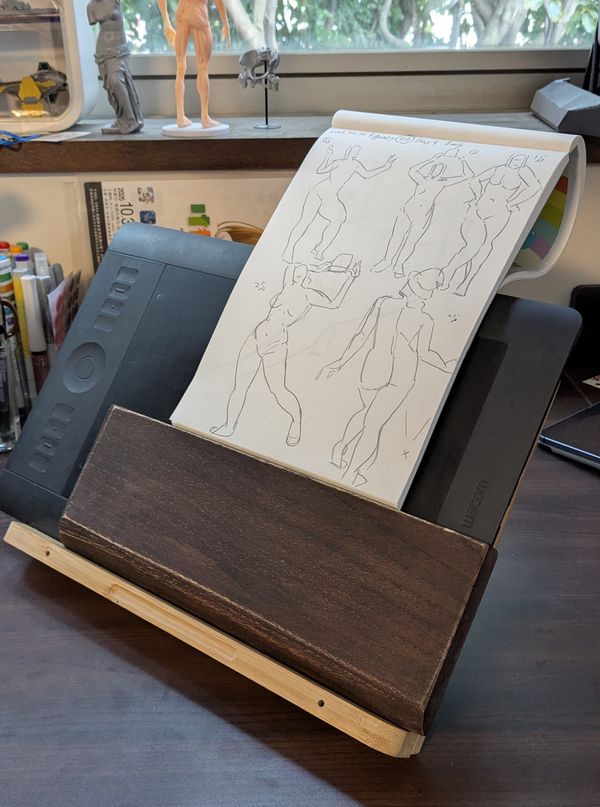
I always use flat scrap wood. When I want to draw on the lower part of the paper, it slides off if I use a slanted surface, so I place it on the wood to hold it at the desired height.
I use a 2B 2mm pencil for pen work. It's well-suited for drawing crisp, dark, and stable lines. Once I get more comfortable, I might even try using a pen. I once tried using a thick pencil, dreaming of drawing contours in a single stroke like a superb charcoal sketch. But because it produces so many different line types, I ended up overthinking it and couldn't get it right.
In closing
In summary, croquis is excellent practice. Continuing it builds your drawing muscles. Once you develop muscle strength and hand movement techniques, you can confidently draw complex curves. However, your ability to draw the human figure doesn't improve as much as you might expect.
It's training that builds muscle memory and strength more than knowledge or technique.
To master drawing, don't rely solely on croquis; pursue separate learning that connects to knowledge and theory.
For reference
Croquis.cafe (Croquis.cafe states that when publishing works created using their reference materials, credit attribution is optional.)